
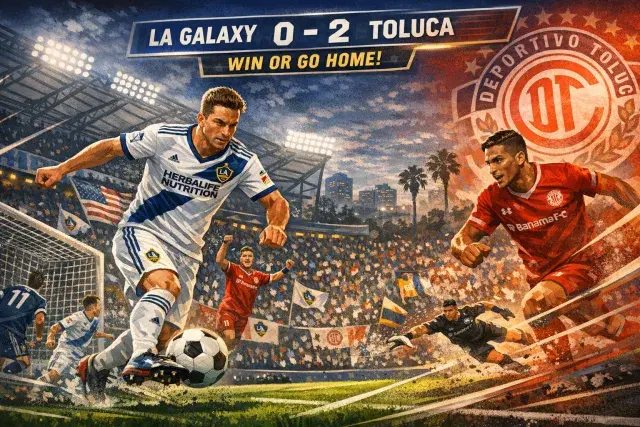

LA Galaxy return to Dignity Health Sports Park facing a narrow but exacting task: erase a two-goal deficit against Toluca and do it without leaving openings for one of the most ruthless attacks they have faced in this competition. The second leg begins on 16 April at 21:00 EST, with a place in the semifinals riding on whether the California side can turn first-leg promise into controlled execution.
The first meeting in Mexico left Galaxy with a mixed verdict. Conceding four times exposed structural weaknesses, particularly when Toluca attacked quickly through central spaces, yet the two away goals from Gabriel Pec and Marco Reus kept the tie alive. Under the away-goals framework described in the context, a 2-0 result would be enough to send Galaxy through, which gives this return meeting a very specific tactical shape from the opening whistle.
Why the first-leg deficit is still recoverable
Not every two-goal gap feels the same. This one is manageable because Galaxy did create meaningful moments in Mexico and because they have proven finishing quality in advanced areas. Pec has been the standout threat in this campaign, while Reus has recently offered both invention and calm in decisive phases. That matters in a second leg, where emotion can easily outrun judgment.
The challenge is less about chasing volume than choosing the right moments to accelerate. A frantic approach would suit Toluca, whose first-leg success was built on punishing disorganisation. Galaxy need territorial pressure, but they also need spacing behind the ball, cleaner rest-defence positions, and fewer cheap transitions conceded after attacks break down.
Toluca’s advantage rests on efficiency, not caution
Toluca arrive with the clearer script. They do not need to dominate possession for long stretches; they need only one precise attacking sequence to complicate Galaxy’s route. Paulinho’s hat-trick in the first leg showed how costly even brief defensive lapses can become. His movement around the penalty area, and Toluca’s ability to supply him quickly, means Galaxy cannot treat this as a siege.
That dynamic often defines knockout return legs. The side protecting an advantage can appear passive while remaining highly dangerous, especially if the opponent commits full-backs and midfield numbers forward. For Galaxy, defensive concentration is not a secondary concern to attack. It is the condition that makes any comeback plausible.
The duel that could decide the night
Pec and Paulinho embody the tie’s central contrast. Pec offers direct running, end product and momentum for Galaxy; Paulinho offers punishment for every defensive error. If Galaxy can get Pec isolated in wide areas and bring Reus into pockets between the lines, the home side can tilt the field. If Toluca can draw Galaxy into stretched, vertical exchanges, the visitors will likely get the kind of chances they need.
That is why this occasion will probably be decided less by spectacle than by discipline. Galaxy do not need perfection everywhere. They need it in the decisive moments: final passes, box defending, second balls, and set-piece concentration.
How to watch and what to expect
English-language live coverage is available through Fubo in the United States, Fubo Canada in Canada, and FanCode in India. Viewers travelling abroad may need a VPN to access their usual service if local restrictions apply.
The likely rhythm is clear even before kickoff: Galaxy pushing for territory and chances, Toluca waiting for the openings that such pressure can create. For the hosts, the route to the semifinals is visible. It is also unforgiving. A clinical, controlled night at home would be enough. Anything looser than that, and the deficit may prove too steep.