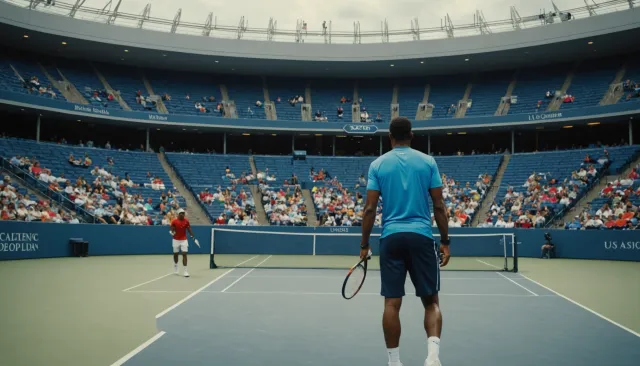
When Senegal faces France on June 16, 2026, at MetLife Stadium in East Rutherford, New Jersey, the encounter will be broadcast live and free across Senegal by the national public broadcaster, Radiodiffusion Télévision Sénégalaise - better known as RTS. For the vast majority of Senegalese viewers, no subscription, no streaming account, and no internet connection will be required. The signal arrives over terrestrial networks, reaching communities far beyond the urban centres where broadband penetration remains uneven.
What RTS Provides and Why It Matters
RTS is Senegal's principal public broadcaster, operating under a mandate to serve the entire national population regardless of income or geography. Its free-to-air terrestrial model is not simply a convenience - it is a structural commitment to universal access. In a country where pay-television and reliable broadband connectivity are not evenly distributed, the significance of a public broadcaster securing rights to a high-profile live event is considerable. Households with a standard television set and an aerial receive full coverage without any additional cost.
The broadcast will include local commentary and contextual coverage tailored to a Senegalese audience. This local production dimension matters beyond mere language: it situates the event within a national narrative, connecting viewers to the wider significance of what is unfolding on screen in real time, thousands of kilometres away in New Jersey.
How France Is Covering the Same Event
Across the Atlantic and in Europe, French viewers have access to coverage through a split-rights arrangement. Free-to-air access is provided by M6, one of France's major commercial broadcasters, which will also stream the event live via its digital platform M6+ - formerly known as 6play. For those who want expanded coverage, dedicated sports commentary, or additional programming around the broadcast, beIN SPORTS holds the premium rights, available to subscribers through the beIN SPORTS CONNECT app or via the myCANAL platform.
This dual-tier structure - one free channel, one subscription service - is increasingly common in European broadcast markets. It reflects regulatory pressure in several countries to keep significant live events accessible to the general public while still allowing premium operators to monetise enhanced coverage. France has maintained rules around listed events that protect free-to-air access for broadcasts deemed of significant public interest.
A Global Broadcast Footprint
The June 16 fixture is covered across a wide range of territories worldwide, with rights distributed to national and regional broadcasters on every continent. The global distribution map reflects the 2026 edition's unprecedented scale: the first World Cup to feature 48 national sides, co-hosted across the United States, Canada, and Mexico. Broadcast arrangements vary sharply by region - some markets offer full free-to-air access, others rely entirely on subscription platforms, and several depend on streaming-only distribution.
- Senegal: RTS (free-to-air terrestrial)
- France: M6 and M6+ (free-to-air and streaming); beIN SPORTS CONNECT and myCANAL (subscription)
- United Kingdom / Ireland: RTÉ for Irish viewers
- Australia: SBS and SBS On Demand (free-to-air and free streaming)
- Germany: ZDF (free-to-air public broadcaster)
- Brazil: Globo and SBT (free-to-air), with streaming via Globoplay and CazéTV
The contrast between markets is telling. Several major democracies - Germany, Australia, Brazil - have secured free-to-air access for their national audiences through public or commercial broadcasters. Others have moved toward a predominantly subscription or streaming model, raising legitimate questions about equitable public access to large-scale live events as traditional broadcast infrastructure gives way to digital platforms.
The Broader Question of Access and Digital Equity
The RTS arrangement in Senegal is a practical illustration of what public broadcasting infrastructure can achieve when rights are properly allocated. As global media rights become increasingly contested and expensive, the pressure on public broadcasters in lower-income markets to secure live event coverage intensifies. The terrestrial free-to-air model may appear technologically dated in an era of 4K streaming, but for the millions of viewers it reaches reliably and without cost, it remains the most equitable distribution mechanism available. That is not a trivial point - it is the central logic on which public broadcasting was originally founded, and it continues to justify the model's existence decades later.